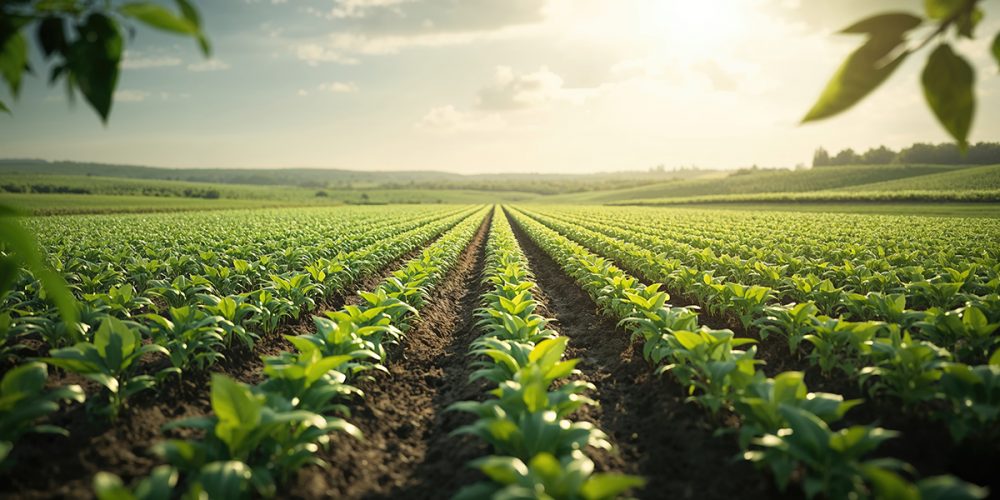
The Herbert W. Hoover Foundation-supported researchers at Kent State University are advancing a new way to monitor carbon, nitrogen, and minerals in agricultural soils using remote sensing and satellite imagery. By reducing reliance on labor-intensive physical soil sampling, the approach could ultimately make it easier for farmers and land managers to track soil health and carbon storage across large landscapes and over time.
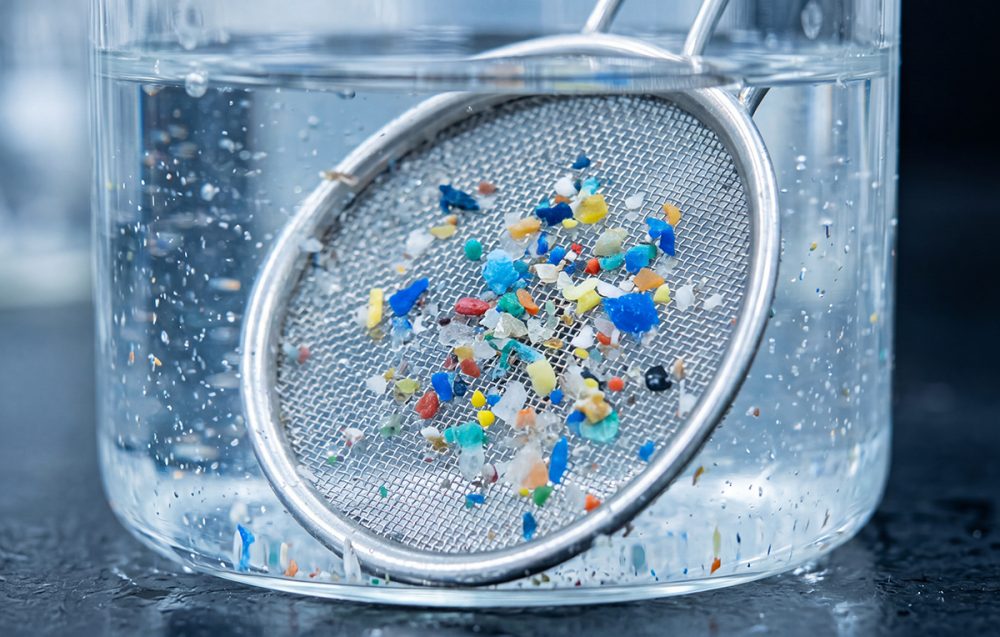
The Herbert W. Hoover Foundation supported Dr. Chelsea Rochman and her team in developing SLoPP and SLoPP-E, open-access Raman spectral libraries designed to make microplastics identification more accessible, reliable, and consistent. Published in Analytical Chemistry, the work created reference spectra for both pristine and environmentally weathered plastics, helping researchers more accurately identify the plastics they encounter in real-world samples. These pioneering libraries went on to help form part of the foundation for OpenSpecy, an open-source platform that is advancing and standardizing the way researchers analyze microplastics using spectroscopy. The project demonstrates how an early investment in foundational scientific tools can continue to ripple forward as those tools are incorporated into new technologies used by the broader research community.
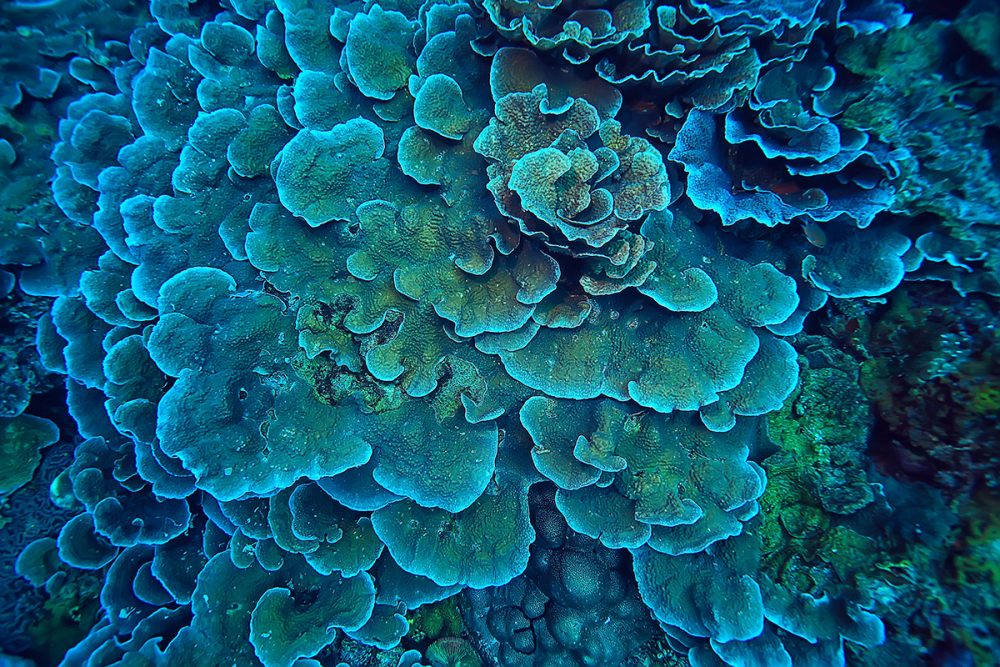
A new Nature Protocols publication provides the first comprehensive, step-by-step method for using CRISPR-Cas9 gene editing in reef-building corals, giving scientists a powerful new tool to better understand how corals grow, tolerate heat stress, and form their essential partnerships with algae. Co-authored by Dr. Phil Cleves, the Herbert W. Hoover Foundation’s 2023 Pew-Hoover Fellow in Marine and Biomedical Science in partnership with The Pew Charitable Trusts, the protocol establishes the foundation for a new era of coral functional genomics. By making gene editing more accessible and reproducible, the work will accelerate research aimed at protecting coral reefs from the impacts of climate change.
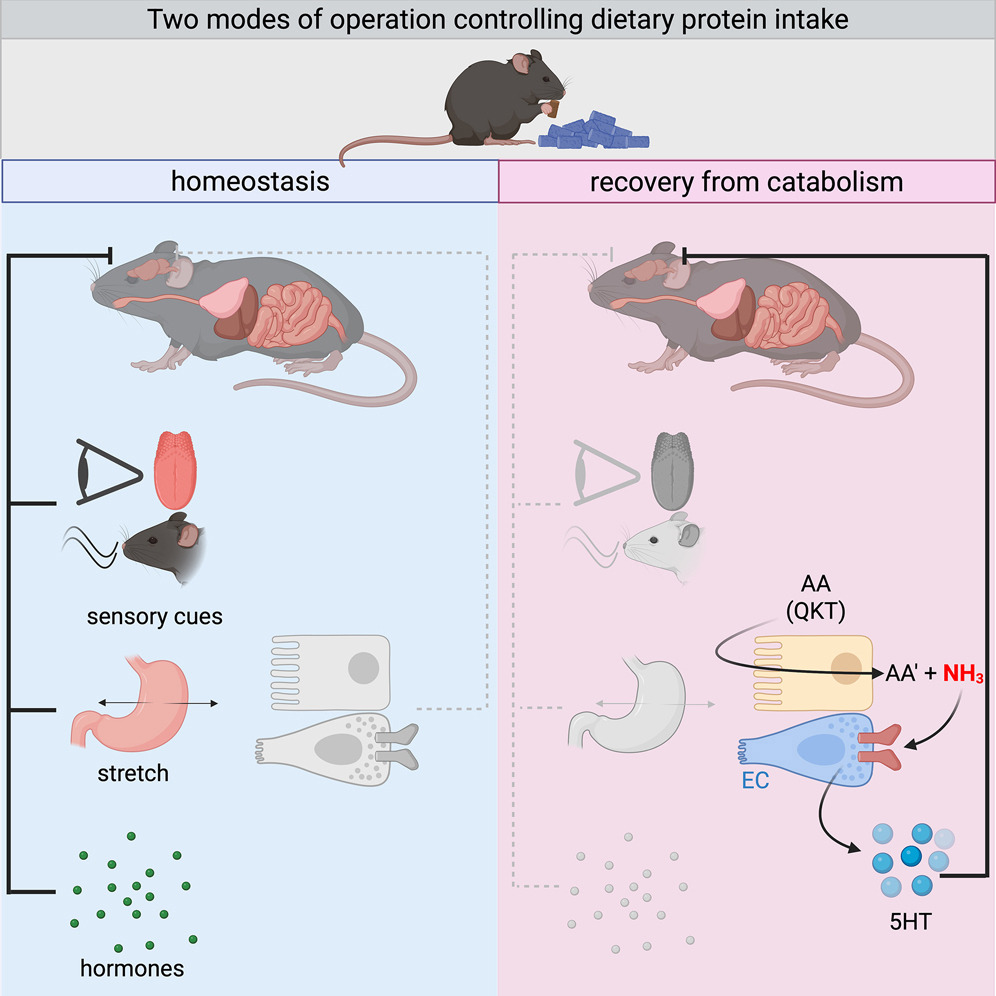
A new study published in Cell uncovers a previously unknown gut-to-brain signaling pathway that regulates dietary protein intake during recovery from illness and other catabolic states. Led by Dr. Andrew Wang at Yale University, the research demonstrates that specific amino acids generate ammonia during metabolism, which is sensed by gut enterochromaffin cells through a TRPA1-dependent mechanism. This signaling triggers serotonin release and communicates with the brain to reduce further protein intake, protecting the body from ammonia toxicity during vulnerable recovery periods. The findings reveal a fundamental biological system by which the body balances nutrient intake with metabolic safety. The project was funded in part by The Herbert W. Hoover Foundation.
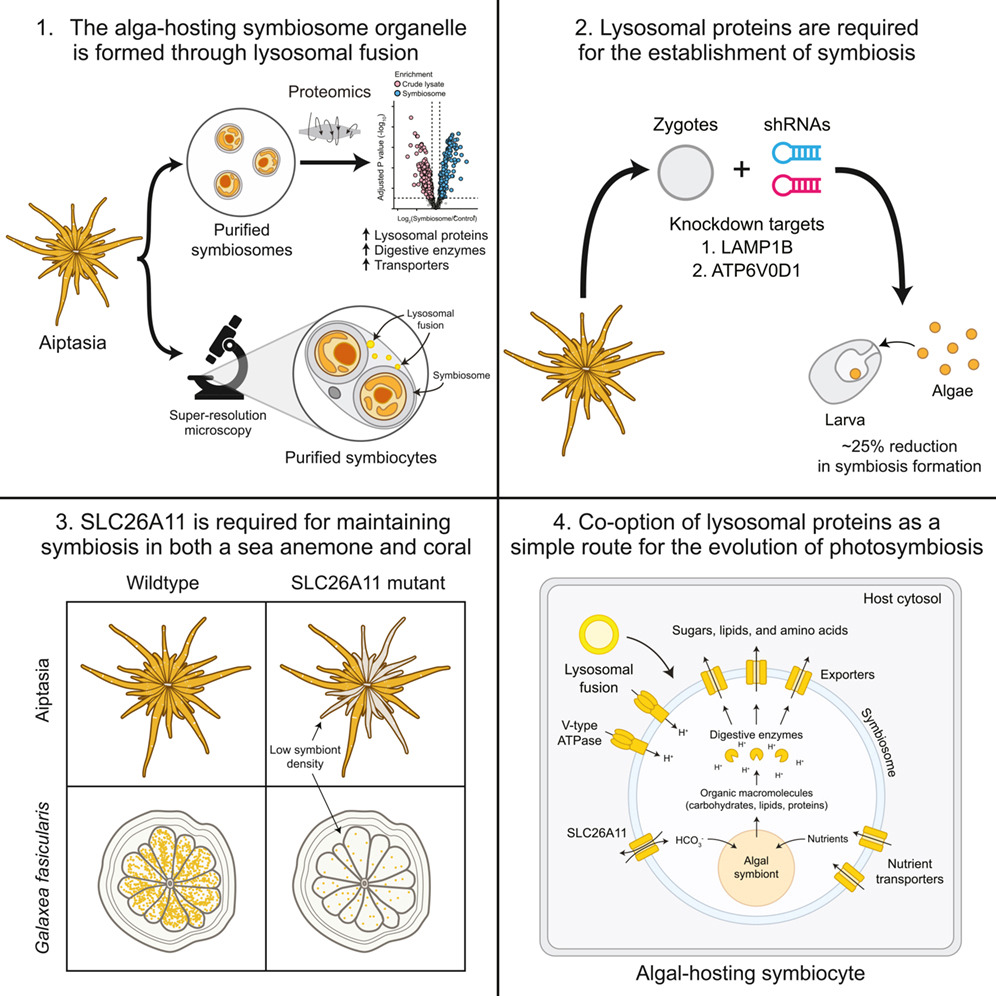
A new study published in Cell uncovers how corals evolved the specialized cellular machinery needed to house the microscopic algae that fuel the world’s coral reefs. Led by Dr. Phil Cleves, the 2023 Pew-Hoover Fellow in Marine and Biomedical Science, the research found that corals repurposed lysosomes—cellular structures traditionally responsible for digestion and recycling—to create the “symbiosome,” the organelle that supports their partnership with photosynthetic algae. The discovery helps explain how this remarkable symbiosis evolved repeatedly throughout nature and provides new insight into the biological processes that underpin the health and resilience of coral reefs.
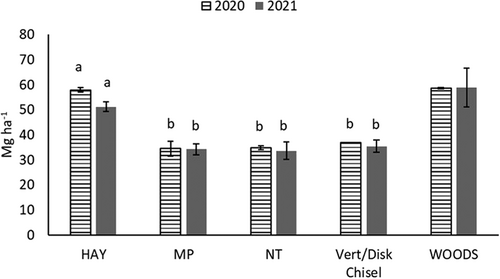
A new study published in the Journal of Sustainable Agriculture and Environment examined how different tillage methods (moldboard plough, vertical/chisel tillage, and no‑tillage) and the use of manure influence soil organic matter, carbon content, and crop yields on working farms in the U.S. Midwest. The research found that crop rotations with mixed forage and hayfields supported higher soil carbon and organic matter compared to continuously cultivated fields, and that positive correlations exist between soil organic matter and corn yield. Incorporating manure helped mitigate soil carbon loss from tillage, though best management practices remain important for long‑term soil and environmental health. This on‑farm research was supported in part by The Herbert W. Hoover Foundation.
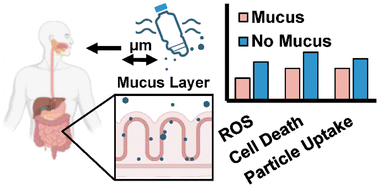
With support from The Herbert W. Hoover Foundation, researchers at Cornell University published new findings in Biomaterials Science showing that human intestinal mucus plays a critical role in blocking microplastics from entering gut tissue. The study revealed that an intact mucus barrier significantly reduces cellular uptake, inflammation, and oxidative stress caused by plastic particles ranging from 40 to 500 nm. Particle size, surface chemistry, and composition all influenced how easily plastics migrated through the barrier. These results deepen our understanding of how microplastics affect human health and highlight the importance of gut integrity in protecting against environmental pollutants. The full article is available here.
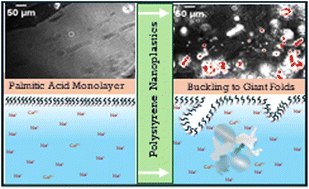
A recent study published in Environmental Science: Atmospheres revealed that nanoplastics — tiny particles from degraded ocean plastics — can disrupt fatty-acid films at the ocean’s surface, which play a key role in how gases and particles move between the ocean and the atmosphere. These changes may affect the formation and behavior of sea spray aerosols, which influence cloud formation and climate processes. The research highlights a new potential pathway for plastic pollution to impact our climate. This paper was funded in part by The Herbert W. Hoover Foundation and featured on the issue cover of Environmental Science: Atmospheres.
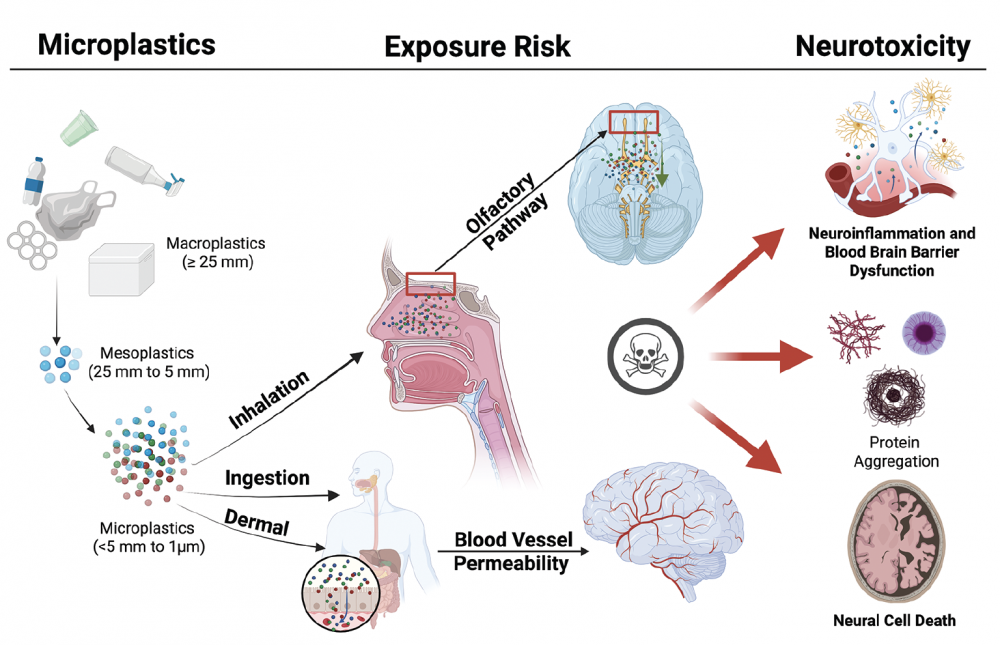
Funded by the Herbert W. Hoover Foundation, a recent review in Practical Neurology examines emerging evidence that microplastics – tiny fragments from degraded or single‑use plastics – can enter and accumulate in the human brain, potentially contributing to neurodegenerative and cerebrovascular illnesses such as dementia, Parkinson’s disease, and stroke.
The authors describe multiple pathways through which microplastics may reach the brain — including inhalation (via the olfactory nerve), ingestion (via the gut–brain axis), or direct passage through a compromised blood–brain barrier.
Once within the brain, microplastics may trigger harmful effects such as oxidative stress, neuroinflammation, disruption of neurotransmitter systems, and aggregation of disease‑associated proteins like amyloid‑β and α‑synuclein.
The article calls attention to significant research gaps — especially around dose, exposure route, and long-term impacts — and advocates reducing exposure to plastics as the most practical step for now. Read the full review here.
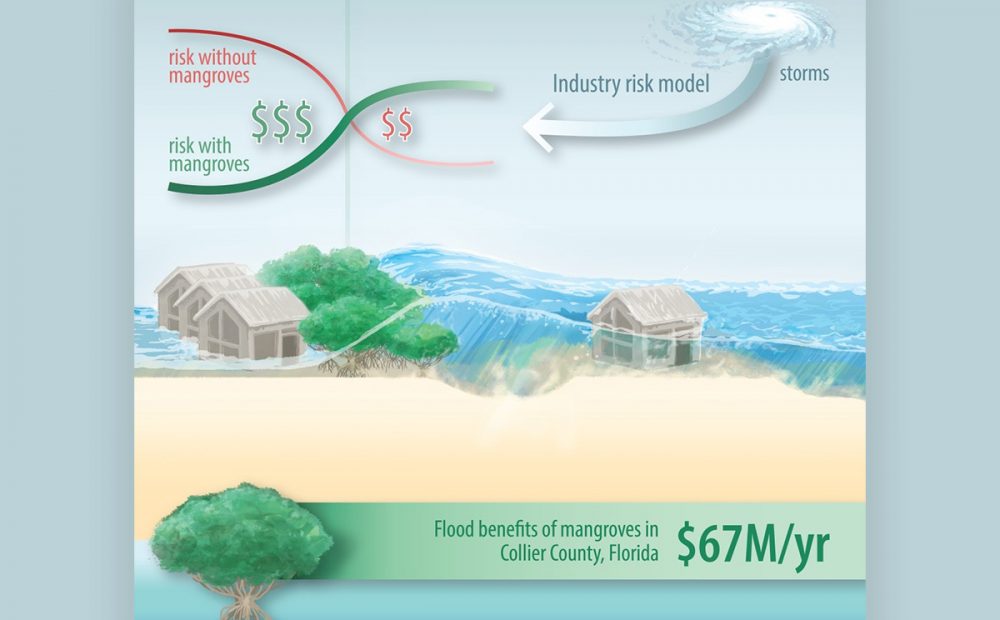
A recent collaboration between UC Santa Cruz’s Center for Coastal Climate Resilience and East Carolina University found that mangrove forests significantly mitigate storm surge damage to inland properties. Using industry-grade catastrophe risk models, the team estimated mangrove-related benefits of $725 million during Hurricane Irma and $4.1 billion during Hurricane Ian. For properties in southwest Florida’s Collier County, the annual value of mangrove-mediated flood protection was estimated at around $67 million. The research is the first to incorporate catastrophe‑modeling tools to assign monetary value to natural coastal defenses. Funding support for this work included a grant from The Herbert W. Hoover Foundation. You can access the full article by visiting this link.
We use cookies to enhance your experience while using our website. If you are using our Services via a browser you can restrict, block or remove cookies through your web browser settings. We also use content and scripts from third parties that may use tracking technologies. You can selectively provide your consent below to allow such third party embeds. For complete information about the cookies we use, data we collect and how we process them, please check our Privacy Policy