Where Does Water Come From?

Source: World Ocean Radio/Peter Neill – August 30, 2016 in Radio

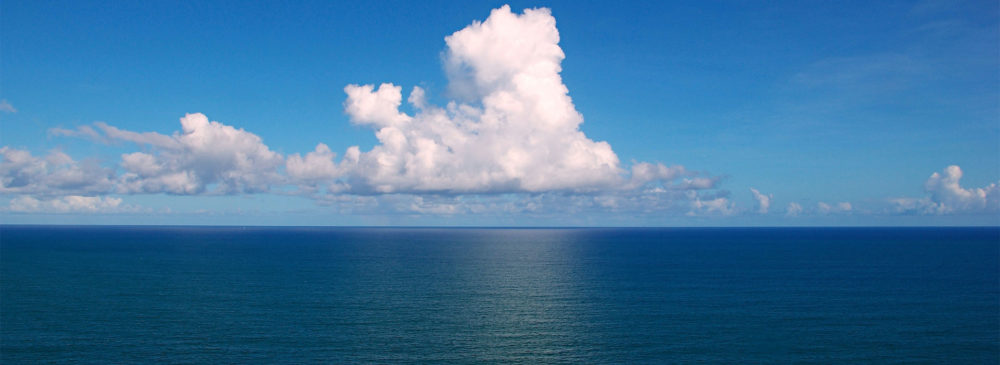
Where does water come from? We know from science that water evaporates from the ocean reservoir, is captured in clouds, fog and rain, descends to seep into the underground aquifer or be distributed via lake and stream. In this episode of World Ocean Radio, host Peter Neill reminds us that the ocean exists at both ends of the water cycle–at mountaintop and abyssal plain–and essential to the sustainable ocean is the protection and conservation of the vast, fluid passage that each of us on this earth relies upon.

Transcript:

Where does water come from? It seems such a simple question, and the answer is known from our earliest science lessons when we are introduced to the water cycle and the global circulation system that is so essential to our well-being now and forevermore. Water evaporates from the ocean reservoir, captured in clouds and fog and rain, from which it descends to become ground water, seeping into the underground aquifer, or surface water distributed by lakes and streams. Some of the water is captured in ice as glaciers and high mountain peaks; some is retained deep in the earth, some perhaps pre-historic in its deposit, but there for now beyond our eager, sometimes desperate, digging and drilling.

All of it is finite in volume.

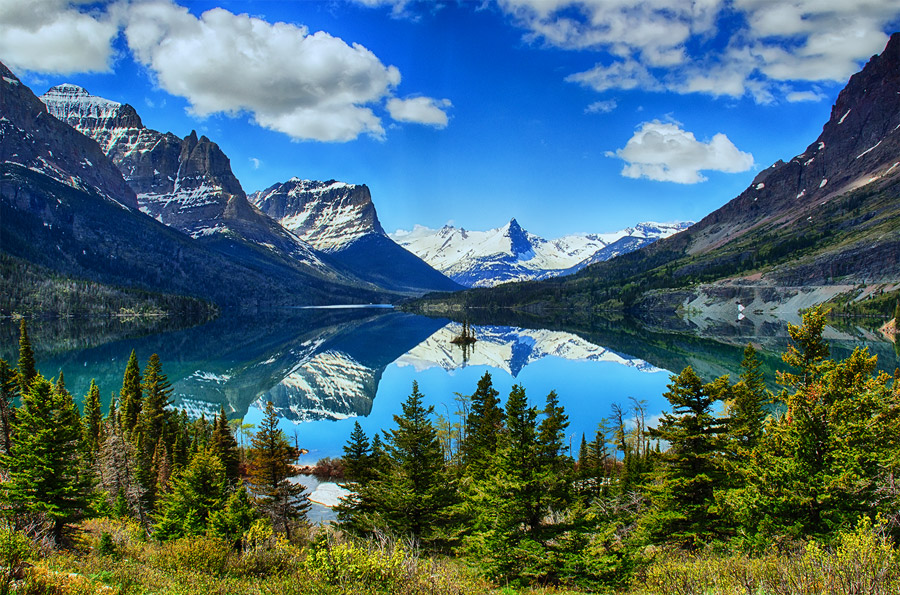
We know this cycle, and if we think about it at all, it becomes easy to understand the idea that the ocean where 97% of that volume is contained is the alpha and omega, the mouth and tail from this circle of sustenance. It becomes easy to see the “edge” of the ocean not at the boardwalk and beach, but rather at the distant snow-capped range where begins the long, convoluted flow of water down and across the land until it reaches its ocean origin…and the cycle begins again.

Essential to the sustainable ocean, then, is the protection and conservation of this fluid passage, the global hydraulics that can be compared to the circulation of blood through our bodies, themselves made substantially of water. Each of us is an ocean, with a comparable circulation, and a reliance on a healthy environment to sustain it. Extend the metaphor: if we treat those bodies with indifference, pollute them with excess and poisons, then we can expect them to succumb to obesity, disease, and collapse. If you think of yourself as the ocean, your family as the ocean, your community as the ocean, your nation as an ocean, then perhaps you will take the necessary steps to sustain the health of each of these many seas.

So, too, with the earth, and we return again to the geography of our living; the ocean, as I choose to define it, as a vast global system of interacting, infused water that extends from mountain-top to abyssal plain and connects us all – physically, financially, politically, socially, and spiritually.

I belabor this point because it lies at the core of any strategy for change. It establishes the context for every decision that follows – the choice to conserve hillsides and watersheds, lakes, ponds, and rivers; the planning for different settlement and systems, for new construction and re-construction; the promulgation of new standards for economic development; the recognition of natural capital and new economic models as significant elements in the pricing of goods and services and the calculation of our gross national product; the re-engineering of the coastal zone; and the definition of new policies to maintain the quality of our air and water, to manage responsibly our ocean resources, and to govern the open ocean under an egalitarian and equitable set of international treaties and agreements that benefit us all.

I belabor this point because that without our understanding of this absolute, this measurable, undeniable fact of life, all our efforts may be for naught, all our strategies may be half-baked, all of our results inadequate. We cannot build a new society, hydraulic or otherwise, if we build it on a weak and corrupted foundation. We cannot change behaviors if we do not accept and assert new core values. This clear and present understanding of the wisdom of Nature and the knowledge revealed can guide and protect us in our first steps toward sustainable practice and global renewal.

Where does water come from? That’s one question, and we know the answer, but here’s another, more difficult one: what will we do, who will we be, when that water has come…and gone?

We will discuss these issues, and more, in future editions of World Ocean Radio.

WORLD OCEAN RADIO IS A PROJECT OF THE WORLD OCEAN OBSERVATORY IN ASSOCIATION WITH WERU FM, BLUE HILL, MAINE. WORLD OCEAN RADIO IS DISTRIBUTED BY THE PUBLIC RADIO EXCHANGE AND THE PACIFICA NETWORK. FIND OUR PODCAST ON ITUNES AND AT WORLD OCEAN OBSERVATORY DOT ORG.

World Ocean Radio

World Ocean Radio is brought to you in collaboration with the World Ocean Observatory. The World Ocean Observatory advocates for the ocean through independent, responsible, apolitical science, and is dedicated to advancing public understanding of ocean issues through institutional collaboration and partnerships, pro-active programs, and connection with individual subscribers around the world.

Study Finds Shark Fins & Meat Contain High Levels of Neurotoxins Linked to Alzheimer’s Disease

UM research team says restricting shark consumption protects human health and shark populations

August 29, 2016

MIAMI—In a new study, University of Miami (UM) scientists found high concentrations of toxins linked to neurodegenerative diseases in the fins and muscles of 10 species of sharks. The research team suggests that restricting consumption of sharks can have positive health benefits for consumers and for shark conservation, since several of the sharks analyzed in the study are threatened with extinction due to overfishing.

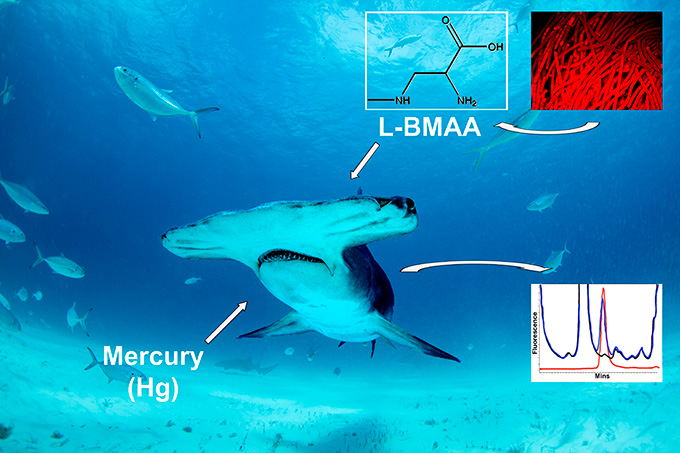
Fins and muscle tissue samples were collected from 10 shark species found in the Atlantic and Pacific Oceans for concentrations of two toxins—mercury and β-N-methylamino-L-alanine (BMAA).  “Recent studies have linked BMAA to neurodegenerative diseases such as Alzheimer’s disease and amyotrophic lateral sclerosis (ALS),” said Deborah Mash, Professor of Neurology and senior author of the study.

Researchers at the UM Rosenstiel School of Marine and Atmospheric Science and UM Miller School of Medicine detected concentrations of mercury and BMAA in the fins and muscles of all shark species at levels that may pose a threat to human health. While both mercury and BMAA by themselves pose a health risk, together they may also have synergistic toxic impacts.

“Since sharks are predators, living higher up in the food web, their tissues tend to accumulate and concentrate toxins, which may not only pose a threat to shark health, but also put human consumers of shark parts at a health risk,” said the study’s lead author Neil Hammerschlag, a research assistant professor at the UM Rosenstiel School and UM Abess Center for Ecosystem Science and Policy.

Shark products including shark fins, cartilage and meat are widely consumed in Asia and globally in Asian communities, as a delicacy and as a source of traditional Chinese medicine. In addition, dietary supplements containing shark cartilage are consumed globally.

Recently scientists have found BMAA in shark fins and shark cartilage supplements. The neurotoxic methyl mercury has been known to bioaccumulate in sharks over their long lifespans.

About 16 percent of the world’s shark species are threatened with extinction. The shark species sampled in this study range in threat status from least concern (bonnethead shark) to endangered (great hammerhead) by the International Union for Conservation of Nature (IUCN).

“Our results suggest that humans who consume shark parts may be at a risk for developing neurological diseases.” said Mash.

“People should be aware and consider restricting consumption of shark parts.  Limiting the consumption of shark parts will have positive health benefits for consumers and positive conservation outcomes for sharks, many of which are threatened with extinction due in part to the growing high demand for shark fin soup and, to a lesser extent, for shark meat and cartilage products.” said Hammerschlag.

The study, titled “Cyanobacterial Neurotoxin BMAA and Mercury in Sharks,” was published in Aug. 16 in the journal Toxins. The study’s coauthors include: Neil Hammerschlag; David A. Davis, Kiyo Mondo, Matthew S. Seely, and Deborah C. Mash from the UM Miller School of Medicine’s Department of Neurology; Susan J. Murch and William Broc Glover from the University of British Columbia; and Timothy Divoll and David C. Evers from the Biodiversity Research Institute in Maine. The Herbert W. Hoover Foundation provided the funding for this study.

# # #

About the University of Miami’s Rosenstiel School

The University of Miami is one of the largest private research institutions in the southeastern United States. The University’s mission is to provide quality education, attract and retain outstanding students, support the faculty and their research, and build an endowment for University initiatives. Founded in the 1940’s, the Rosenstiel School of Marine & Atmospheric Science has grown into one of the world’s premier marine and atmospheric research institutions. Offering dynamic interdisciplinary academics, the Rosenstiel School is dedicated to helping communities to better understand the planet, participating in the establishment of environmental policies, and aiding in the improvement of society and quality of life. For more information, visit:  www.rsmas.miami.edu. To learn more about UM’s Shark Research and Conservation Program, visit www.SharkTagging.com

Photo Credit: Photo – Neil Hammerschlag, Ph.D.
Graphics – University of Miami Miller School of Medicine

We must recommit to national parks, America’s cathedrals

By Jonathan B. Jarvis

Jonathan B. Jarvis is Director of the National Park Service.

[Editors Note:  This editorial originally appeared in the Washington Post on August 24, 2016]

In 1914, Stephen Mather, a wealthy director of a borax mining company in California, observed the deteriorating conditions of some of America’s national parks and wrote a letter of protest to Interior Secretary Franklin Lane. Lane responded: “Dear Steve, if you don’t like the way the parks are being run, come on down to Washington and run them yourself.” Such challenges have launched many political careers in Washington, including my own. I started in the National Park Service during the nation’s bicentennial in 1976, and a similar call brought me to Washington in 2009 to lead the agency through its centennial this year.

One hundred years ago Thursday, on Aug. 25, 1916, President Woodrow Wilson signed the act creating the National Park Service — with Mather as its first director. The Organic Act states that the fundamental purpose of the NPS “is to conserve the scenery and the natural and historic objects and the wild life therein and to provide for the enjoyment of the same in such manner and by such means as will leave them unimpaired for the enjoyment of future generations.”

For the past century, the National Park Service has been providing for the enjoyment of our most beautiful, treasured and historic places, put into our stewardship by Congress and both Democratic and Republican presidents. A

large number of NPS employees join the service for life, because this work is more than a career; it is a mission. That mission is unlike that of any other federal agency: We serve as keepers of the nation’s cultural memory.

The 413 units of the national park system are a collective expression of who we are as a people, and in the words of historian John Hope Franklin, “the public looks upon national parks almost as a metaphor for America itself.” The parks deliver messages to current and future generations about the foundational experiences that have made the United States a symbol of democracy’s greatest achievements for the rest of the world. The Obama administration has worked to ensure that the parks tell the story of the United States’ cultural history. Among the 22 sites that President Obama has added to the national park system are places that will ensure that the memories of Martin Luther King Jr., Harriet Tubman, Col. Charles Young and the Buffalo Soldiers, and César Chávez endure.

One of our newest sites, the Stonewall National Monument in New York, will memorialize the struggles that the lesbian, gay, bisexual and transgender community has faced over the years, along with one of its major victories.

But the National Park Service’s enabling legislation requires that these places and ideas are not just preserved but enjoyed. This leads me to believe that we are the only federal agency with a mandate to ensure that the American people have some fun.

In 1956, when planning for our 50th anniversary, the National Park Service invited World War II veterans to come and see what they had fought for. In partnership with the growing automobile industry, the service invited them to “See the USA in your Chevrolet.” Veterans came out in droves with their children in the back seats of their station wagons, and from those experiences grew a groundswell of support for conservation and historic preservation. Those children today are the baby boomers, now with millennial children and grandchildren.

For our 100th anniversary, in partnership with the National Park Foundation, we invited everyone to “Find Your Park,” to foster the creation of a new generation of park visitors, supporters and advocates reflecting the diversity of our nation. The result of this effort has been record-setting visitation and a surge of sharing on social media about extraordinary park experiences.

But this anniversary is much more than a celebration. It also calls for introspection and a forward-looking vision recommitting to the ideals and aspirations that bind us as a nation and to the institution tasked with their stewardship — the National Park Service.

Filmmaker Ken Burns said that national parks are the Declaration of Independence applied to the land. Regardless of ethnicity, social status or level of wealth, Americans appreciate the beauty of grand landscapes. Our national parks provide the opportunity for all to experience that beauty as equals.

It is pretty hard to not feel a wash of pride for our country when you stand at the rim of the Grand Canyon National Park, in the alpine glow of Grand Teton National Park, on the steps of the Lincoln Memorial or on the bloodstained fields of Gettysburg National Military Park. These are our American cathedrals, and they belong to you. Come and enjoy them and refresh your memory of what it means to be an American.

Editorial: Embrace group’s effort to bring high-speed broadband to Stark

The Herbert W. Hoover Foundation was the initial funder of a study for broadband access and feasibility in Stark County.  This editorial originally appeared in the Canton Repository on August 21, 2016.

By The Repository Editorial Board

August 21. 2016 7:45AM

Earlier this month, Fairlawn began constructing its FairlawnGig network in neighborhoods across the city. The municipal broadband utility is already delivering “warp” internet speeds to select areas, according to media reports.

It could take up to two years and $10 million to run the network past each of Fairlawn’s 3,800 homes and business, but once it’s complete, internet speeds will dwarf those now available. According to the city, speeds will be 20 times faster for downloads and 200 times faster for uploads than anything previously available. Residential plans range from $30 to $75 a month. Businesses plans cost from $150 to $500.

A similar story has unfolded in Hudson, which last fall launched its Velocity Broadband service, which the city promises will outpace and be more reliable than any existing service offered by cable, phone and wireless companies, according to Crain’s Cleveland Business.

Hudson, Fairlawn and hundreds of other cities across the country are embarking on this digital frontier in hopes of providing faster and cheaper internet service to residents and businesses.

In Stark County, a similar push is underway. The Stark County Area Broadband Task Team will release a feasibility study Oct. 12 during a program at Kent State University at Stark. The Canton Repository’s Edd Pritchard reported Tuesday that Kent State Stark is the task team’s newest partner. It plans to explore opportunities for service, research and integration.

The Broadband Task Team, made up of large and small businesses, local governments and nonprofit agencies, believes high-speed broadband is needed to support an economy that’s more and more reliant on internet-based applications and cloud computing and that one day will see artificial intelligence and robotics “supplement” human labor. Access to high-speed broadband can help the county improve educational opportunities, retain our best and brightest workers and expand the economy.

The so-called “fourth utility” would provide 1 gigabit service to households and 100 gigabit service to businesses. Currently, Ohio’s average speed is 28 megabits, according to Seattle-based Speedtest. Service at 1 gigabit would provide speed about 35 times faster.

Jackie DeGarmo, founder and co-chair of the task team, compares — accurately — these efforts to those of the city of Canton in the 1950s and 1960s, when the leaders constructed a massive water system to serve resident and industries. Today, the water system is considered one of the city’s greatest assets. It has been used as a marketing tool to lure big businesses.

DeGarmo says the task team’s goals can be achieved in several ways, including through public-private partnership that involves current providers.

The study, which is being prepared by Magellan Advisors, will be key to determining how much a high-speed broadband network will cost to construct, how to fund the work and its overall feasibility. Ninety community leaders already have been interviewed, but the task team needs more input. That’s why we urge residents to participate in a survey at TheForthUtility.com. (Yes, it’s “forth” in the URL.)

Let’s not fall behind other cities that aggressively are laying the infrastructure of the future. If we truly want to reverse the negative economic trends of the last few decades and turn Stark County into a place our children want to call home, than it’s imperative that we recognize the value of this endeavor and embrace the work of the Stark County Broadband Task.

Is That Real Tuna in Your Sushi? Now, a Way to Track That Fish

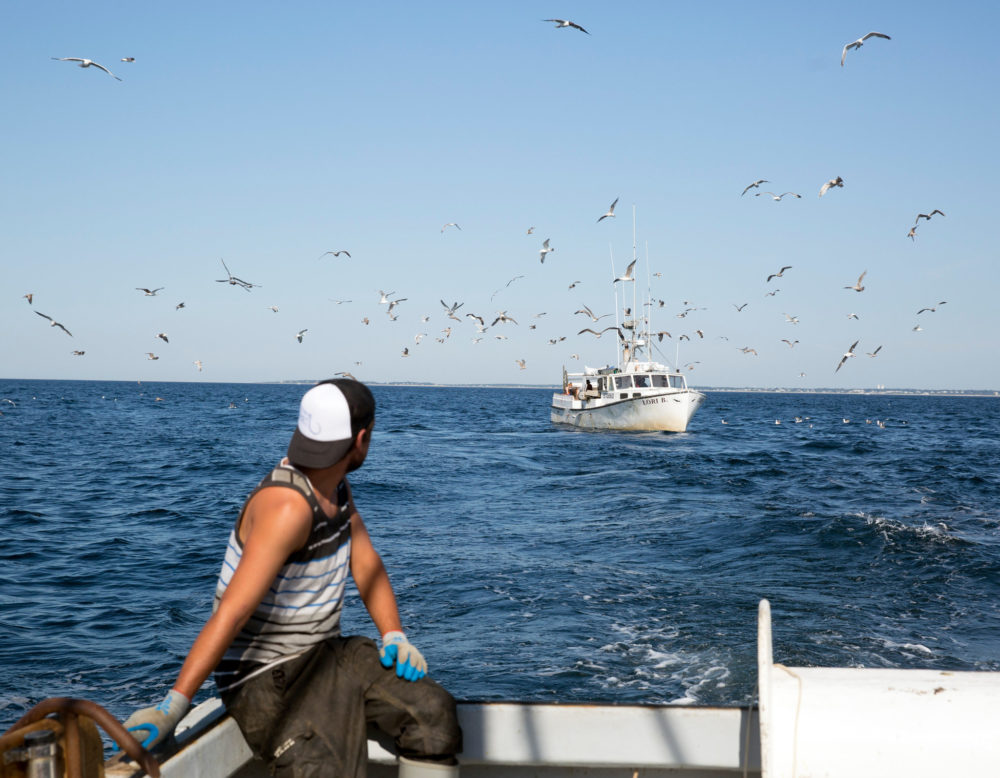
“Most people don’t think data management is sexy,” says Jared Auerbach, owner of Red’s Best, a seafood distributor in Boston. Most don’t associate it with fishing, either. But Mr. Auerbach and a few other seafood entrepreneurs are using technology to lift the curtain on the murky details surrounding where and how fish are caught in American waters.

Beyond Maine lobster, Maryland crabs and Gulf shrimp, fish has been largely ignored by foodies obsessing over the provenance of their meals, even though seafood travels a complex path. Until recently, diners weren’t asking many questions about where it came from, which meant restaurants and retailers didn’t feel a need to provide the information.

Much of what’s sold has been seen as “just a packaged, nondescript fish fillet with no skin,” says Beth Lowell, who works in the seafood-fraud prevention department at Oceana, an international ocean conservation advocacy group. “Seafood has been behind the curve on both traceability and transparency.”

What’s worse is that many people have no idea what they’re eating even when they think they do. In a recent Oceana investigation of seafood fraud, the organization bought fish sold at restaurants, seafood markets, sushi places and grocery stores, and ran DNA tests. It discovered that 33 percent of the fish was mislabeled per federal guidelines. Fish labeled snapper and tuna were the least likely to be what their purveyors claimed they were.

Several years ago, Red’s Best developed software to track the fish it procures from small local fishermen along the shores of New England. Sea to Table, a family business founded in the mid-1990s with headquarters in Brooklyn that supplies chefs and universities, has also developed its own seafood-tracking software to let customers follow the path of their purchases. Wood’s Fisheries, in Port St. Joe, Fla., specializes in sustainably harvested shrimp and uses software called Trace Register.

And starting this fall, the public will be able to glimpse the international fishing industry’s practices through a partnership of Oceana, Google and SkyTruth, a nonprofit group that uses aerial and satellite images to study changes in the landscape. The initiative, called Global Fishing Watch, uses satellite data to analyze fishing boat practices — including larger trends and information on individual vessels.

From a young age, Mr. Auerbach had romantic notions about fishing, specifically the idea of catching fish to feed his family and neighbors.

“It’s cool in this day and age that people wake up in the morning and go make a living interacting with nature and feeding their community,” he said. He went into commercial fishing straight out of college, taking a job on an Alaskan salmon boat and later returning to New England to work on lobster boats and learn more about the fishing industry there.

Soon after Mr. Auerbach founded Red’s Best in 2008, he realized that a combination of government regulations and commercial fishing’s embrace of technology were effectively threatening the existence of small fishing boats. Yet smaller boats travel short distances and catch fewer fish, which Mr. Auerbach said improves their quality.

“We try to push people to eat local, traceable fish,” he said.

Like most other seafood distributors, he was relying on an antiquated, four-part carbon copy system that was so cumbersome, he was routinely shuffling paperwork until 2 a.m.

“The boat would get a copy at the point of unloading,” Mr. Auerbach said. “The government would get a copy. I’d file a copy. And then I’d write in the prices.” As for paying the fishermen: “I’d have to get checks and then match the checks to the paperwork and mail them. It was an absolute nightmare that wasn’t scalable.”

Now the Red’s Best software does that work. For instance, a company driver backs a truck down to the long wooden pier in Woods Hole, Mass., each afternoon, so that fishermen can load their bluefish, striped bass, bonito, conch, horseshoe crabs and other seafood. But instead of a thick pad of paper and carbon sheets, the driver wields a waterproof wireless computer tablet with a Bluetooth mobile printer.

“He’s putting their catch data directly onto the internet, and our whole staff all over the country can see in real time as fish is being unloaded onto our truck,” Mr. Auerbach said. When the fish arrives at Red’s Best’s Boston plant, it is instantly received into inventory and reported to the federal government.

The company affixes a traceability label on each box of fish. The label has a two-dimensional bar code that can be scanned by smartphones to reveal who caught the fish, where and how. A unique web page is automatically created for that fish. Buyers, typically high-end wholesalers throughout the country, and their customers can scan the code to learn the story behind the fish.

Mr. Auerbach, who has 100 employees, projects the company will sell 20 million pounds of seafood this year, caught almost exclusively by 1,000 small vessels.

Eventually, Red’s Best hopes to sell directly to consumers. “Like, a bluefin tuna is being unloaded right this second in Provincetown, Mass., and you buy a pound of it to be delivered to your home tomorrow,” he said. “I want that tuna sold as deep into the supply chain as possible.”

By that he means ideally the fish will travel from the company’s Boston hub directly to home cooks’ refrigerators. Currently, people can buy Red’s Best fish at its store at the Boston Public Market, at several farmers’ markets, or shipped through AmazonFresh and, starting last week, FedEx.

“I got the data,” he said. “I got the fish. I know people want it.”

Sea to Table hopes to sell fish directly to home chefs starting this year, too.

But local seafood can cost more than many Americans are accustomed to paying, which partly accounts for the rampant seafood fraud in this country.

“U.S. fisheries are very well managed and are actually growing nicely,” said Michael Dimin, the founder of Sea to Table. “But the U.S. consumer’s been trained to buy cheap food, and imported seafood is really cheap because of I.U.U. fishing.” I.U.U. stands for illegal, unreported and unregulated. The result is unsustainably fished, cheap seafood flooding American fish markets and grocery chains.

“To us, the secret is traceability,” Mr. Dimin said. “If you can shine a light on where it came from, you can make informed decisions.”

Mr. Auerbach concedes that some local fish is expensive, but he maintains that many lesser-known varieties are affordable. “Maybe halibut and scallops are for the wealthy,” he says. “But dogfish, skate, porgy and mackerel are all very inexpensive, healthy and great tasting.”

Margaret Goodro named to Lead Biscayne National Park

NATIONAL PARK SERVICE News Release       Release Date: August 8, 2016

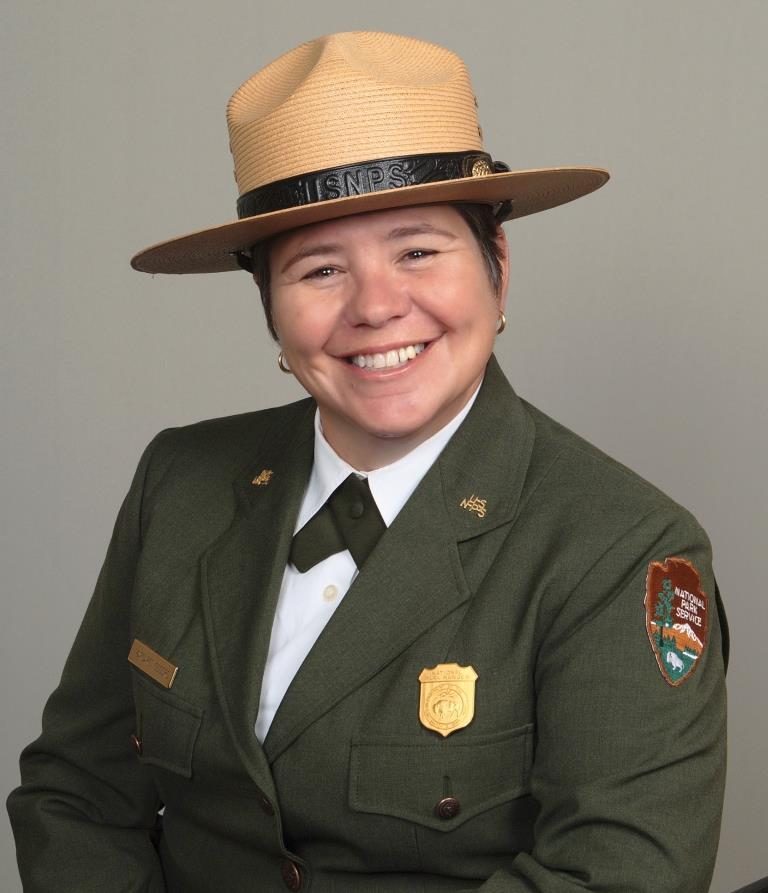
ATLANTA – The National Park Service has selected Margaret L. Goodro to lead Biscayne National Park as its next superintendent. Goodro replaces Brian Carlstrom, who left the position in November 2015 to serve in a Deputy Associate Director position in the Washington, D.C. office of the National Park Service.

Goodro is currently serving as superintendent of Lake Clark National Park and Preserve in Anchorage, Alaska where she has been since 2013. While there, Goodro created and fostered strong partnerships with internal and external organizations. In addition, she had extensive experience managing more than 30 alternative energy projects while working for the Bureau of Land Management.

“I am honored to be selected, and to serve as the superintendent of Biscayne National Park,” said Goodro. “I look forward to working with park staff, stakeholders and partners to continue the great work of providing amazing recreational opportunities for visitors, while also protecting and preserving this rare tropical park for today’s and future generations.”

Goodro has a 24-year career of public service including positions in county, state and federal parks. She served as the El Centro Field Manager for the Bureau of Land Management in El Centro, California. Goodro’s National Park Service experience includes serving as the Chief Ranger of Visitor and Resource Protection at Lake Roosevelt National Recreation Area, District Ranger at Lake Mead National Recreation Area, and Sub-District Ranger at both North Cascades and Glacier National Parks. She also gained valuable experience working in various park ranger positions in Yosemite, Crater Lake, Glacier Bay and North Cascades National Parks.

Goodro, a native of Washington State, spent her formative years camping and boating on the lakes and coasts of Washington as part of a commercial fishing family. Goodro, and her spouse Melinda (a native of Tampa, Florida), will be moving to Florida in late October.

EXPERIENCE YOUR AMERICA

The National Park Service cares for special places saved by the American people so that all may experience our heritage.

“Margaret is a proven collaborative leader with experience working in parks, central offices, and as a superintendent. She is passionate about bringing together and engaging park partners and local communities,” said Stan Austin, regional director for the Southeast Region. “As we move into our second century, we look forward to working with her as she assumes the top leadership position at Biscayne National Park.”

Biscayne National Park –

The park protects one of the most extensive coral reef tracts in the world, the longest stretch of mangrove forest on the east coast, the clear and shallow waters of Biscayne Bay, and the northernmost Florida Keys. Biscayne’s human history begins more than 10,000 years ago with the migration of Paleo-Indians down the Florida peninsula. Within sight of downtown Miami, the park provides a reprieve for outdoor enthusiasts to hike, boat, snorkel, camp, watch wildlife and simply relax in this unique national preserve.

Lake Clark National Park & Preserve – This four-million-acre national park and preserve was established in 1980 to “protect the watershed necessary for the perpetuation of the red salmon fishery in Bristol Bay”. Salmon, particularity sockeye salmon, play a major role in the ecosystem and the local economy. It is a land of stunning beauty where volcanoes steam, salmon run, bears forage, mountains reflect shimmering turquoise lakes, and local people and culture still depend on the land and water of their home.

– NPS –

About the National Park Service: More than 20,000 National Park Service employees care for America’s 412 national parks and work with communities across the nation to help preserve local history and create close-to-home recreational opportunities. Learn more at http://www.nps.gov.

Foundation Grantee is Runner-Up for the 2016 Indianapolis Prize

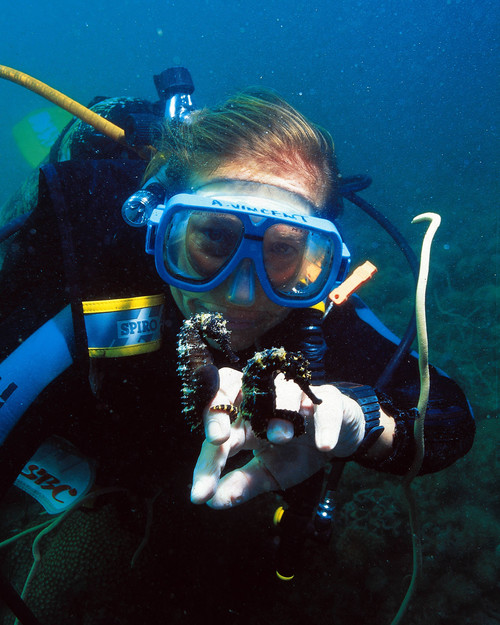
[Editors Note:  Dr. Amanda Vincent was a runner-up in this competition.  Dr. Vincent is a recent recipient of a grant from the Herbert W. Hoover Foundation, focusing on Seahorse Distribution and Marine Conservation in Biscayne National Park.

By Matt Adams, Web Producer

Note:  This article was originally published on cbs4indy.com

INDIANAPOLIS, Ind. – Carl Jones has been selected as the winner of this year’s Indianapolis Prize.

Jones was recognized earlier Wednesday during a ceremony in London. Jones, chief scientist of the Durrell Wildlife Conservation Trust and scientific director of the Mauritian Wildlife Foundation, will receive $250,000 in cash and the Lilly Medal.

The Indianapolis Prize is the world’s leading award for animal conservation. Jones is lauded for major victories in saving animal species from extinction. He’s credited with bringing back at least nine species from the brink of extinction in his 40 years of work in Mauritius, including the Mauritius kestrel, pink pigeon, echo parakeet, Rodrigues warbler and Rodrigues fody. In addition, his work has helped restore the population of many other species.

“Winning the 2016 Indianapolis Prize is undoubtedly one of the highlights of my career,” Jones said of the award. “It’s a great accolade not just for me, but for Gerry Durrell and the people who have made this work possible over the years. I’m particularly proud of this award because it validates the conservation of animals — like Telfair’s skinks and pink pigeons — that are not megavertebrates, but provide critically important ecosystem services nonetheless.”

Dr. Simon Stuart, chair of the IUCN Species Survival Commission, nominated Jones for the Indianapolis Prize.

Born and raised in Wales, Jones received his masters and doctorate from the University of Wales in Swansea. He currently splits his time between Wales and Mauritius.

Jones will be formally honored at the 2016 Indianapolis Prize Gala in Indianapolis Oct. 15, 2016. Five other finalists for the award will receive $10,000 each:

  • Joel Berger, Ph.D.: (Wildlife Conservation Society, Colorado State University) Dr. Berger strives to save flagship species like the muskox in the Arctic tundra and the wild yak of the alpine on the Tibetan Plateau. Beyond studying migration paths for large mammals, Berger’s actionable conservation models help researchers understand populations as modern metaphors for climate change. Berger was also a Finalist for the 2014 Indianapolis Prize.
  • Dee Boersma, Ph.D.: (Penguin Sentinels, University of Washington Department of Biology) Penguins, as sentinels of our oceans, have no greater champion than Dr. Boersma. For more than four decades she has studied Galapagos penguins, showing how these seabirds are indicators of environmental change. She has followed the lives of Argentina’s Magellanic penguins to help strengthen protections and conservation efforts for colonies, using her science to prevent harvesting, reduce oiling and secure marine protected areas.
  • Rodney Jackson, Ph.D.: (Snow Leopard Conservancy) One of the world’s foremost experts on the elusive, endangered snow leopard, Dr. Jackson endures harsh winters and dangerous terrain to track these “ghosts of the mountain” and teach locals how to coexist peacefully with them. Jackson was also a Finalist for the 2008, 2010 and 2012 Indianapolis Prize.
  • Carl Safina, Ph.D.: (The Safina Center at Stony Brook University) A crusader for the ocean and its creatures, Dr. Safina works to effectively connect humans with marine species. He has pioneered innovative approaches to studying species ranging from reef coral to whales, and established a sustainable seafood program, bringing science-based criteria to consumers. Safina was also a Finalist for the 2010 and 2014 Indianapolis Prize.
  • Amanda Vincent, Ph.D.: (Project Seahorse, University of British Columbia) Among the first to study seahorses underwater, Dr. Vincent helped put the world’s 47 species on the global conservation agenda. Initiating the first seahorse conservation project, her programs have led to 35 no-take marine protected areas, the first global export controls for marine fishes and a bold new citizen science venture, iSeahorse. Vincent was also a Finalist for the 2010 Indianapolis Prize.

The biggest coral reef in the continental U.S. is dissolving into the ocean

By Chelsea Harvey  May 4th, 2016

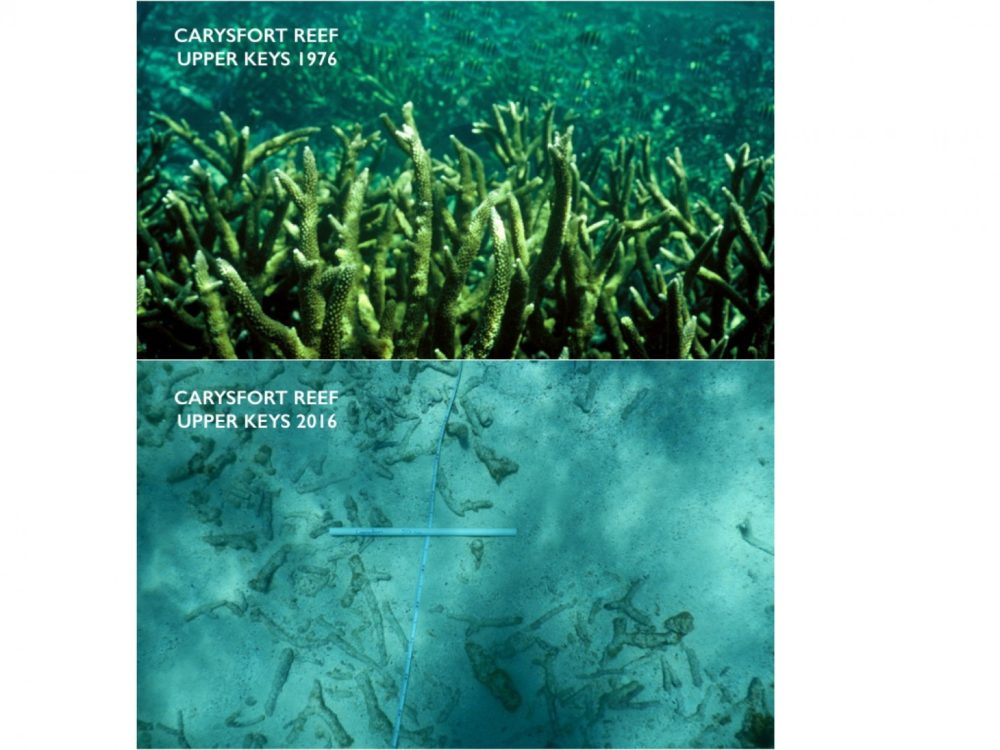
The long-suffering Florida coral reef tract — the largest reef in the continental U.S. and third-largest barrier reef ecosystem in the world — may have bigger problems than anyone thought, according to new research from the University of Miami and Florida International University. Scientists have discovered that part of the reef is actually dissolving into the water, likely thanks to the effects of human-induced ocean acidification.

The research, published earlier this week in the journal Global Biogeochemical Cycles, took surveys of coral throughout the Florida Keys from 2009 to 2010, using chemical analyses of water samples to examine the rates at which corals were either calcifying — that is, building new parts of the reef — or disintegrating into the water.

They found that the reef was dissolving, at least during some parts of the year (generally the fall and winter), in various places throughout the Keys. In the spring and summer, some areas to the south were able to make up for these losses — but, worryingly, the researchers found that the part of the reef in the northern Keys, closer to Miami, was already eroding more quickly than the corals were able to rebuild themselves.

The culprit appears to be ocean acidification, a chemical process that happens when carbon dioxide dissolves in the water and undergoes a reaction that lowers the ocean’s pH. When this happens, several consequences can occur, according to the new study’s lead author, Chris Langdon, chair of the University of Miami’s department of marine biology and ecology.

First, when water becomes more acidic, limestone — which is what makes up the hard, rocky skeletons secreted by corals — can start to dissolve, “just like you dropped a sugar cube in water,” Langdon said. Additionally, a lower pH can make it easier for certain types of organisms to burrow into the coral skeletons and make their homes there, further breaking down the reef.

The results are especially worrisome, given that the northern part of the reef appears to have hit a tipping point in which more limestone is being lost than rebuilt. While it’s well established that acidification is bad for coral, previous research had suggested that reefs around the world likely wouldn’t hit this net erosion threshold until closer to mid-century, when carbon dioxide levels were higher.

Most of these previous experiments were either conducted in laboratories or involved very small-scale, controlled studies of the environment, said Langdon, which did not reflect all the complexities of a natural reef. More recently, some field experiments have suggested that the world’s reefs may hit their tipping points sooner than previously predicted — and Langdon’s study represents the most recent of these, as well as “the largest natural experiment that’s been done to date,” he said.

It’s still unclear why the scientists observed such a gradient in the Keys from north to south, with the northernmost corals getting the worst of the deal. According to Langdon, acidity is known to vary from north to south, since colder water is able to hold more dissolved carbon dioxide. But it’s also possible that the northern part of the reef’s proximity to the heavily populated Miami-Dade County could be having a negative impact because of pollution and other human activities, making the corals more vulnerable to environmental stressors.

Acidification can cause disintegration of reefs even when they’re otherwise healthy — but the new study is all the more concerning because the Florida reef tract has already suffered its share of stress over the past few years. In 2014 and 2015, the reef experienced an unprecedented bleaching event and widespread disease outbreak, likely brought on by both the effects of climate change and 2015’s unusually severe El Nino event.

Local reports have noted that the bleaching and disease remain ongoing in some parts of the reef. Brian Walker, a research scientist at the National Coral Reef Institute at Nova Southeastern University, noted that there was some sign of bleaching recovery back in November on the northern part of the reef tract, where his research is focused — but the disease outbreak did not appear to slow down over the winter.

“This is concerning because the 2016 summer is predicted to be as hot if not hotter on the reefs,” Walker said in an email to The Washington Post.

And, although bleaching and dissolving can happen independently and don’t always occur side by side, both processes weaken coral reefs and can exacerbate one another — meaning the Florida reef tract is in an especially vulnerable state. That’s a problem not only because of its importance to fish and other marine life as a natural ecosystem, but also because of its significance to the local economy. Reef-related tourism brings nearly $3 billion per year to the region, according to Langdon.


He pointed out, though, that the Florida reef tract is unlikely to be the only location in the world suffering from dissolving limestone.

“The right studies haven’t been performed yet to see if this is happening in other places,” Langdon said. But ocean acidification is happening throughout the world, meaning other reefs are likely vulnerable to the same kinds of effects. And investigating the processes affecting corals around the world is increasingly important as reefs become more and more vulnerable to environmental stressors.

At the moment, a global bleaching event — triggered by the 2015 El Nino event, but likely exacerbated by the ongoing warming effects of climate change — has ravaged reefs all over the world. The Great Barrier Reef in Australia, for instance, has experienced bleaching on more than 90 percent of its extent, according to Australia’s National Coral Bleaching Task Force.

As the climate continues to warm, these types of bleaching events are only expected to become more common — and the acidification of the seas will also increase the more greenhouse gases we pour into the air. On that note, the most meaningful action that can be taken to protect the world’s corals is strong mitigation efforts when it comes to our carbon output, according to Langdon.

“The really important point is the cause of both [bleaching and acidification] is carbon dioxide emissions,” he said. “And reducing emissions will reduce the severity of both of them.”

https://www.washingtonpost.com/news/energy-environment/wp/2016/05/04/the-largest-coral-reef-in-the-continental-u-s-is-dissolving-into-the-ocean/

Climate Change Special Report from the University of Miami

April 26, 2016 – For Immediate Release

From the Desk of University of Miami President Julio Frenk, M.D., Ph.D.:

Knowing that issues related to the environment are important to you, I wanted to share a new University of Miami Climate Change Special Report. This is an area where the University of Miami is uniquely positioned to make significant contributions in understanding the influences of climate change and investigating solutions for mitigation and adaptation.

This comprehensive, interactive website showcases the work of our scientists, researchers, faculty, students, staff, and alumni from all 11 schools and colleges in the areas of climate change and sustainability. The report can be found here: http://climate.miami.edu.

The University of Miami is deeply committed to serving as a responsible and responsive leader in bridging scholarship to solutions for pressing issues affecting our community and our planet.

Cuyahoga Valley park seeking scientists, volunteers for May 20-21 2016 BioBlitz

[Editors Note:  this article originally appeared on ohio.com on April 25, 2016]

By Bob Downing
Beacon Journal staff writer

The Cuyahoga Valley National Park is preparing to inventory its flora and fauna on May 20-21, and it needs lots of help.

More than 80 local scientists and 1,200 volunteers are expected to participate in the park’s 24-hour BioBlitz to count plants, aquatic insects, amphibians, bats, birds, fish, fungi, insects, lichens, mollusks, reptiles and spiders.

Scientists will lead groups of community participants on surveys at locations throughout the park to create a snapshot of the park’s plants and animals.

The event officially begins at noon May 20, a Friday, and ends at noon May 21, a Saturday, in the 33,000-acre federal park between Akron and Cleveland.

But 500 school-age children from Northeast Ohio have been invited to join in the count on Friday morning in the park.

In addition, the park will stage a Biodiversity Festival beginning at 11 a.m. May 20 and 9 a.m. May 21 at the park’s Howe Meadow with hands-on science, music, arts and crafts vendors, and food.

On May 20, the festival will run until 6 p.m., with additional night hikes, bat viewing and astronomy sessions. On May 21, it will last until 2 p.m.

Local singer/songwriter Alex Bevan and gospel/jazz/fusion band the Funkyard Experiment will perform from 6 to 8 p.m. May 20 at the meadow off Riverview Road in Cuyahoga Falls.

Volunteers need some expertise to help on surveys but no special experience is needed to help with the two-day festival for families.

The Cuyahoga Valley’s BioBlitz is one of 123 across the country being staged by the National Park Service to mark its 100th anniversary. The initiative will provide a snapshot of the park system’s biodiversity through citizen science.

The national event is being co-hosted by the National Geographic Society, with results being disclosed on the National Mall in Washington, D.C.

“Biodiversity refers to the variety of life on our planet,” said Jennie Vasarhelyi, chief of interpretation, education and visitor services for the Cuyahoga Valley park. “The value of biodiversity is fundamental to life as we know it on Earth. Wild species are part of natural systems that regulate climate, air quality, and cycles of carbon, nitrogen, oxygen, mineral elements and water.”

Such surveys provide park managers with a key way to understand the health of the natural environment and a way to monitor change, she said.

This year’s survey could show a boost in fish and insects in the now-cleaner Cuyahoga River and it may show a decline in cave-dwelling bats that have been hit by the fatal white-nose syndrome, she said.

It is the first time that such an event has been staged in the Cuyahoga Valley, although Summit Metro Parks has held similar events in the past at the Gorge and Cascade Valley metro parks and Liberty Park. The Western Reserve Land Conservancy also held a similar event in 2015 at Haley’s Run in southeast Akron.

The Gorge event in 2006 recorded 385 species.

“BioBlitz is a fantastic opportunity to develop a better understanding of our park, and we’re collaborating extensively with schools, universities, government agencies and environmental, health and youth organizations in planning and implementing it,” Vasarhelyi said.

Individual surveys will use the app iNaturalist to catalog living organisms.

Interested participants are encouraged to visit the local BioBlitz website at www.nps.gov/cuva/bioblitz.htm to view survey opportunities and sign up.

Participants can follow, share and retweet their experiences using Facebook (www.facebook.com/NatureNPS) and Twitter (@NatureNPS) with the hashtags #BioBlitz2016, #NPS100 and #FindYourPark.

http://www.ohio.com/news/local/cuyahoga-valley-park-seeking-scientists-volunteers-for-may-20-21-bioblitz-1.678558


Privacy Settings
We use cookies to enhance your experience while using our website. If you are using our Services via a browser you can restrict, block or remove cookies through your web browser settings. We also use content and scripts from third parties that may use tracking technologies. You can selectively provide your consent below to allow such third party embeds. For complete information about the cookies we use, data we collect and how we process them, please check our Privacy Policy
Youtube
Consent to display content from - Youtube
Vimeo
Consent to display content from - Vimeo
Google Maps
Consent to display content from - Google