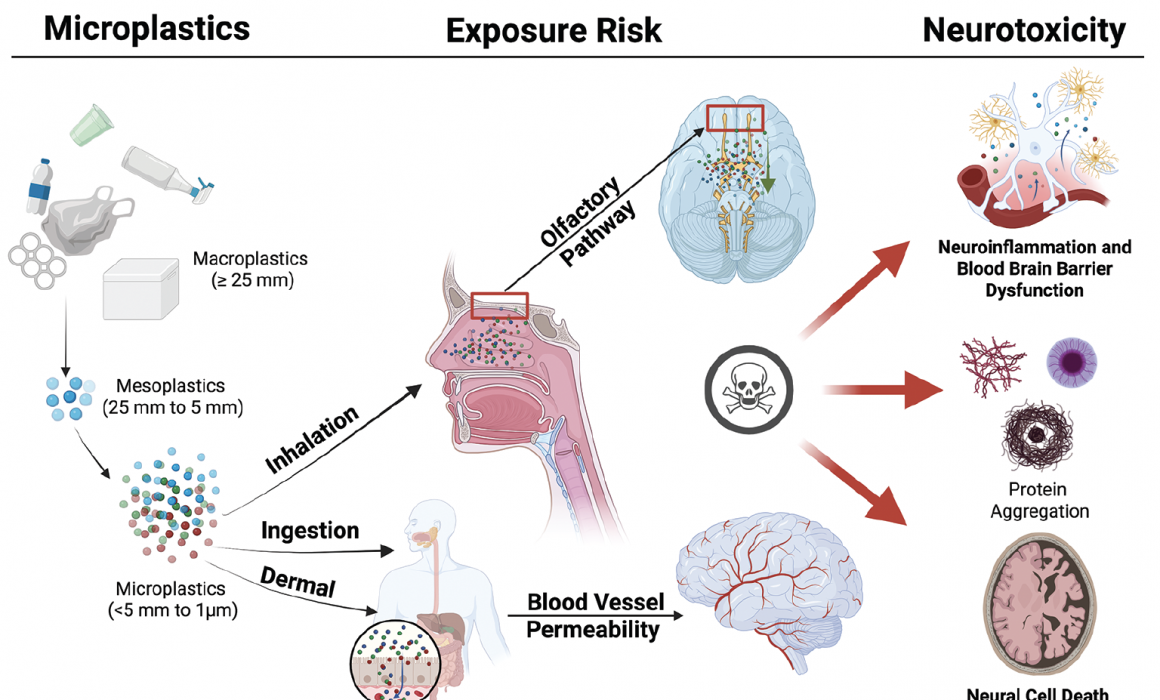
Funded by the Herbert W. Hoover Foundation, a recent review in Practical Neurology examines emerging evidence that microplastics – tiny fragments from degraded or single‑use plastics – can enter and accumulate in the human brain, potentially contributing to neurodegenerative and cerebrovascular illnesses such as dementia, Parkinson’s disease, and stroke.
The authors describe multiple pathways through which microplastics may reach the brain — including inhalation (via the olfactory nerve), ingestion (via the gut–brain axis), or direct passage through a compromised blood–brain barrier.
Once within the brain, microplastics may trigger harmful effects such as oxidative stress, neuroinflammation, disruption of neurotransmitter systems, and aggregation of disease‑associated proteins like amyloid‑β and α‑synuclein.
The article calls attention to significant research gaps — especially around dose, exposure route, and long-term impacts — and advocates reducing exposure to plastics as the most practical step for now. Read the full review here.
We use cookies to enhance your experience while using our website. If you are using our Services via a browser you can restrict, block or remove cookies through your web browser settings. We also use content and scripts from third parties that may use tracking technologies. You can selectively provide your consent below to allow such third party embeds. For complete information about the cookies we use, data we collect and how we process them, please check our Privacy Policy