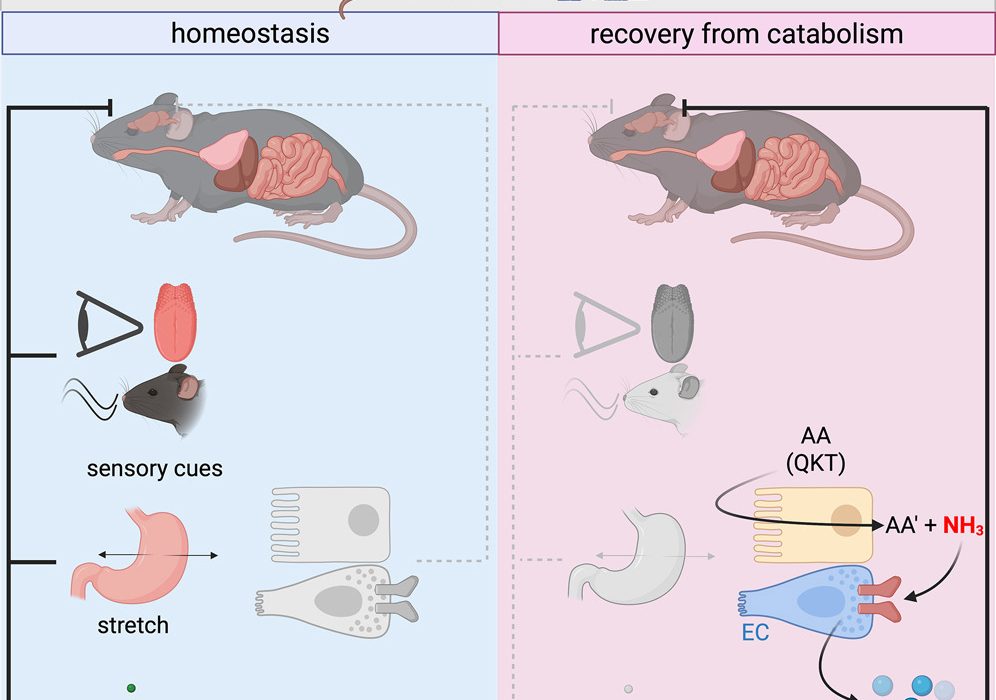
A new study published in Cell uncovers a previously unknown gut-to-brain signaling pathway that regulates dietary protein intake during recovery from illness and other catabolic states. Led by Dr. Andrew Wang at Yale University, the research demonstrates that specific amino acids generate ammonia during metabolism, which is sensed by gut enterochromaffin cells through a TRPA1-dependent mechanism. This signaling triggers serotonin release and communicates with the brain to reduce further protein intake, protecting the body from ammonia toxicity during vulnerable recovery periods. The findings reveal a fundamental biological system by which the body balances nutrient intake with metabolic safety. The project was funded in part by The Herbert W. Hoover Foundation.
We use cookies to enhance your experience while using our website. If you are using our Services via a browser you can restrict, block or remove cookies through your web browser settings. We also use content and scripts from third parties that may use tracking technologies. You can selectively provide your consent below to allow such third party embeds. For complete information about the cookies we use, data we collect and how we process them, please check our Privacy Policy